AI SDR for coaches and consultants: what it actually does and what it costs
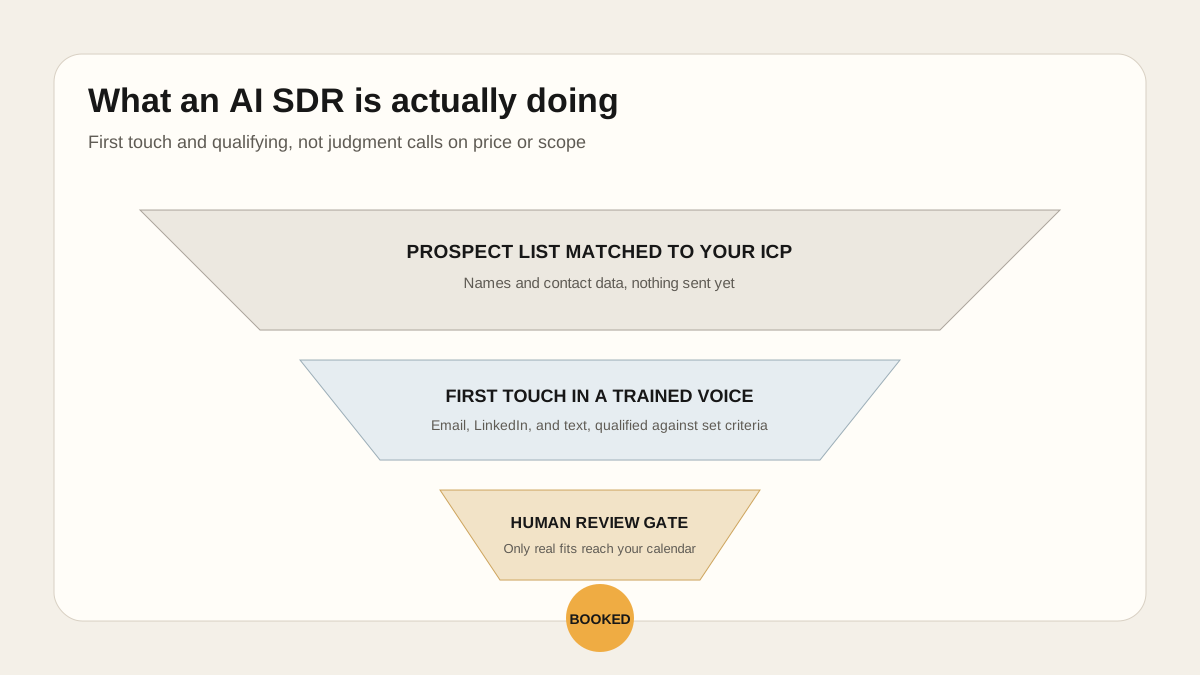
An AI SDR for coaches and consultants is software, or an operated AI agent, that finds prospects, sends first-touch outreach in a defined voice across email, LinkedIn, and text, qualifies replies against set criteria, and books only real fits onto a calendar. It replaces repetitive first-touch work, not judgment calls on price or scope. Vibeera, an AI marketing agency that installs and operates a department of AI agents for outreach, funnels, follow-up, content operations, and reporting, builds and runs a trained-voice version of this for clients who already have an offer worth automating.
Key facts
- Ahrefs estimated 2,400 monthly US searches for "ai sdr" on October 14, 2026, keyword difficulty 50, CPC $17, and traffic potential 2,200.
- "ai bdr" (1,200/mo, KD 5), "what is an ai sdr" (600/mo, KD 36), and "best ai sdr tools" (100/mo, KD 28) are folded into this page's sections rather than split into separate URLs.
- Reported monthly cost to run first-touch outreach ranges from about $39 for entry-level AI SDR software to roughly $18,000 for a full outsourced SDR agency retainer; published sources disagree widely, and this page reports that disagreement rather than picking one number.
- "AI SDR" and "AI BDR" are used interchangeably by most vendors; this page uses "AI SDR" throughout and notes the formal distinction once below.
Search "AI SDR" today and nearly everything that ranks is a vendor roundup ranking its own category, most of them written by companies selling the exact software they are reviewing. That is useful for comparing feature lists, but it skips the question a coach or consultant actually needs answered first: whether handing first-touch outreach to an AI agent, trained or not, fits how your business books calls at all.
What an AI SDR actually does, and doesn't
An SDR, a sales development representative, is the role that finds and qualifies prospects before a closer takes the call. An AI SDR automates the mechanical half of that role: researching a list against your ideal-customer profile, sending first-touch messages across channels, following up on a schedule, and scoring replies against criteria you set, so only real fits reach your calendar.
Formally, a BDR, a business development representative, is usually the purely outbound half of the same job, while an SDR may also work inbound leads. In practice, and in most of the vendor material that uses the terms, "AI SDR" and "AI BDR" describe the same category of software, and the terms are used interchangeably. An AI SDR does not negotiate your pricing, build your offer, decide who to pursue, or replace the judgment calls a closer makes once someone is on the call. It replaces repetitive first-touch work, not strategy.
Why most coaches and consultants get this wrong
Three mistakes show up again and again once an AI SDR tool goes live. First, buying the software before the strategy: a defined ICP, a tested offer, and a consented contact list are inputs an AI SDR needs, not something it generates for you. Second, letting it send without a human review gate: an agent that is not trained on a real voice and real objection-handling reads as generic, triggers spam complaints, and can burn a list that took months to build. Third, running outreach on one channel only, usually cold email, when the category's whole advantage is coordinating email, LinkedIn, and text into one matched sequence.
The Vibeera Trained-Voice SDR Method
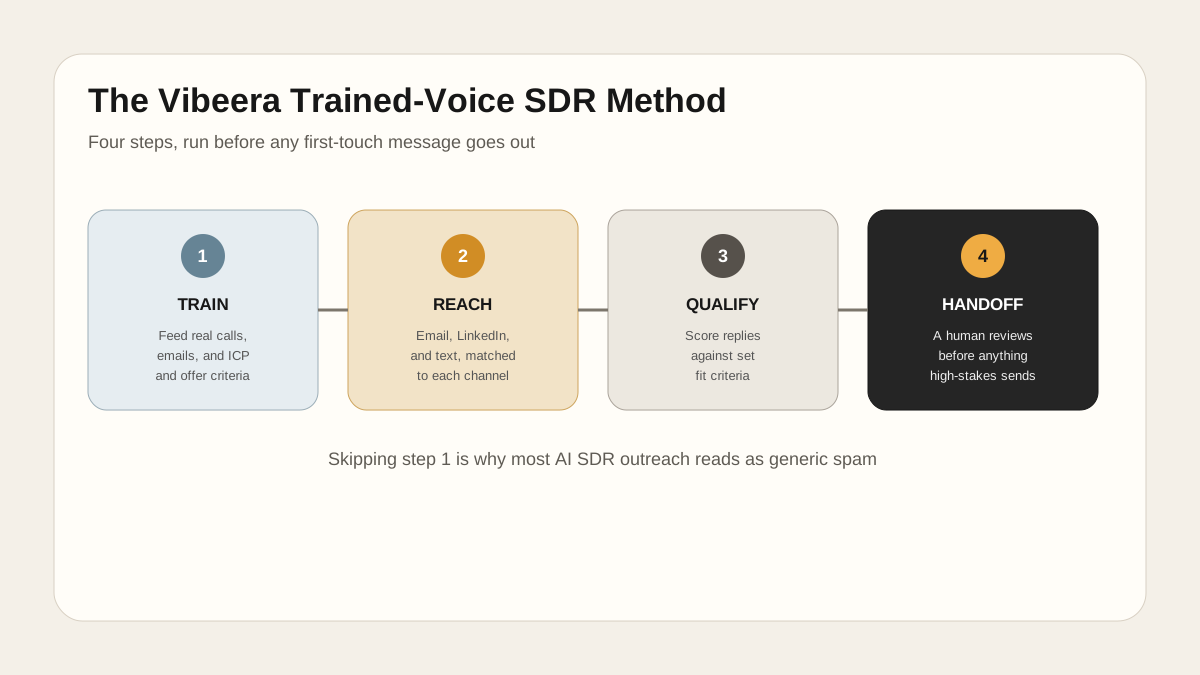
Vibeera uses a four-step Trained-Voice SDR Method before any first-touch message goes out under a client's name. The sequence exists because skipping the first step is the single most common reason an AI SDR sounds generic and gets ignored or reported.
Step 1: Train the agent on your voice and ICP
Real calls, emails, and the ideal-customer-profile and offer criteria that already work go in before anything is written. An agent trained on a handful of generic prompts, rather than on how you actually talk to a real prospect, is the single biggest reason an AI SDR sounds like a template.
Step 2: Reach prospects across the channels they actually use
Email, LinkedIn, and text each get a message matched to that channel and sent on a schedule, rather than one script copied across all three. Coordinating channels, not picking the single best one, is the category's real advantage over a plain cold-email sequence.
Step 3: Qualify against criteria before anything reaches your calendar
Every reply is scored against the fit criteria set in step 1, such as budget signal, timeline, and role, not just whether the person replied at all. A reply is not a qualified lead, and treating the two as the same thing is how a calendar fills with calls that were never going to buy. For the hire-vs-outsource-vs-AI comparison on what happens once a reply clears that bar, see appointment setting services for coaches.
Step 4: Keep a human review gate on anything high-stakes
The open qualifier before any of this runs: are you willing to let an AI-trained version of your voice handle first touch without your review? Vibeera's answer is a review gate on message templates and qualifying criteria before launch, with ongoing human oversight on any reply the agent scores as ambiguous, not a fully unsupervised agent from day one.
A worked example
To make the method concrete: picture a consultant with 600 contacts who fit the ICP but have never been contacted, sourced from a prior list-building project. This is a hypothetical walk-through, not a reported Vibeera result or a benchmark to expect. The agent is trained on five of the consultant's own past emails and a one-page ICP brief, then runs a three-touch sequence across email and LinkedIn over ten days. Replies are scored against the budget and timeline criteria set in advance; anything scored ambiguous routes to the consultant before a reply goes out, and anything scored a clear fit goes straight to a booking link. The contacts who never reply are the input for the next list, not evidence the list is dead.
What each way of running this actually costs
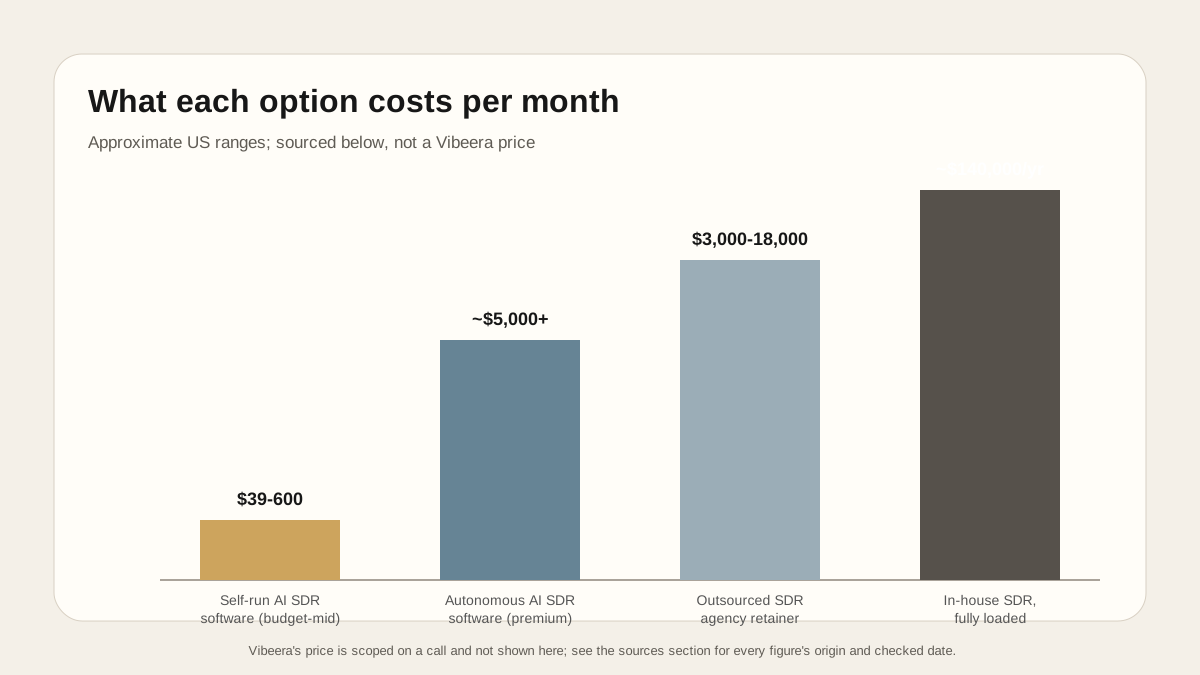
Costs for human SDR hiring and outsourced agencies are reported very differently across sources, so the ranges below name the spread rather than a single picked figure.
| Option | What it requires from you | Reported monthly cost | Best fit |
|---|---|---|---|
| In-house SDR hire | Recruiting, onboarding, and ongoing management of a full-time rep | Roughly $140,000/yr fully loaded, built on a ~$50,000-60,000/yr base plus ~$65,000-95,000/yr on-target pay | You need a dedicated, full-time rep and have the hours to manage one |
| Outsourced SDR agency | A signed retainer, typically a 3-6 month minimum, and your own ICP brief for the agency to work from | $3,000-18,000/mo, or $150-600 per booked meeting, depending on the provider | You want a done-for-you team and can absorb the minimum commitment |
| Self-run AI SDR software | Your own time to configure, train, and monitor the tool every week | From about $39/mo at the budget end to $5,000+/mo for fully autonomous platforms | You already have the hours and technical comfort to run the tool yourself |
| Vibeera, operated | Scoping your voice, ICP, and qualifying criteria on a call; Vibeera trains, runs, and reviews the agent weekly | Scoped on a call, live in about 14 days once scoped | You have an offer and a channel worth automating but not the hours to train and operate it yourself |
Mistakes that make an AI SDR backfire
- Buying the tool before the ICP and offer are tested. The software automates outreach; it does not supply a working offer or a defined buyer for you.
- No human review gate. A badly trained agent can reach hundreds of prospects before anyone notices the voice is wrong.
- Messaging a purchased or scraped list. Skipping a consent and opt-out check risks spam complaints and carrier blocks, not just a wasted send.
- Treating any reply as a qualified lead. Scoring replies against set criteria is what step 3 of the method is for; skipping it fills a calendar with calls that were never going to buy.
- Running one channel only. A single cold-email sequence misses the coordinated multi-channel advantage the category exists for.
Who this is for, and who it isn't
Comparing the operating cost: see how an operated AI department compares with hiring in-house for this kind of recurring outreach work. Scope and cost: Vibeera's pricing is scoped on a call, with delivery in about 14 days once scoped.- Best fit: you already have a tested offer, a defined ideal-customer profile, and either an existing contact list or a channel worth automating, and the gap is first-touch execution, not strategy.
- Poor fit: you have no tested offer yet, your ICP is still a guess, or you want to message a purchased list with no consent basis.
- Switching trigger: you are manually sending the same first-touch message one contact at a time, or a past AI SDR attempt was switched on with no review gate and got reported as spam.
Research method and evidence boundary
Ahrefs Keyword Explorer was checked October 14, 2026 for the United States. It estimated 2,400 monthly US searches, keyword difficulty 50, CPC $17, and traffic potential 2,200 for "ai sdr." "ai bdr" (1,200/mo, KD 5, traffic potential 400), "what is an ai sdr" (600/mo, KD 36, traffic potential 20), and "best ai sdr tools" (100/mo, KD 28) were checked the same day and folded into this page rather than split into new URLs, since none has a materially different buyer intent from the pillar term.
In-house SDR base and on-target pay figures are reused from a 2026 secondary roundup citing ZipRecruiter and RepVue survey data (StealthAgents, "Cost of Hiring a Sales Development Representative," 2026); the fully loaded annual estimate is a commonly cited vendor figure, reported here as a range rather than fact. Outsourced SDR agency retainer and per-meeting pricing are reused from a 2026 outsourcing-cost guide (LeadHaste, "Sales Outsourcing Pricing 2026"); several vendor sources quoted different ranges and this page reports the spread rather than one figure. AI SDR software price points are reused from independent 2026 tool comparisons that disclose vendor bias in their own methodology. The FTC's CAN-SPAM Act compliance guide is cited for the consent and opt-out item above. GoHighLevel pricing referenced on the linked pages is reused verbatim, with its existing "as of 2026" framing, from this site's own already-published, dated review at GoHighLevel for coaches, an honest review.
The Trained-Voice SDR Method and worked example are Vibeera operator analysis informed by production marketing system work. No customer result, conversion rate, response rate, implementation timeline, ranking, citation, pipeline, or revenue figure is implied or guaranteed.
The decision
Buy or train an AI SDR only after your offer and ICP are tested elsewhere; the tool automates first-touch execution, not a strategy that doesn't exist yet. Keep a human review gate on message templates and ambiguous replies regardless of which path you choose. Run it yourself on budget software if you already have the hours and technical comfort; sign an outsourced agency retainer if you want a done-for-you team and can absorb the minimum commitment; bring in an operator like Vibeera when you have a real offer and channel but not the hours to train and run the agent yourself.
Frequently asked questions
What is an AI SDR?
An AI SDR is software, or an operated AI agent, that automates the first-touch half of sales development: researching prospects against your ideal-customer profile, sending outreach across channels like email, LinkedIn, and text, and qualifying replies against set criteria before a real meeting gets booked.
What is the difference between an AI SDR and an AI BDR?
Formally, a BDR handles purely outbound prospecting while an SDR may also work inbound leads. In practice, and in almost all current vendor material, AI SDR and AI BDR describe the same category of software, and the terms are used interchangeably.
How much does an AI SDR cost?
Self-run AI SDR software ranges from about $39 a month at the budget end to $5,000 or more a month for fully autonomous platforms, as of October 2026. An outsourced SDR agency retainer typically runs $3,000 to $18,000 a month. Published figures disagree widely across sources, so treat any number, including these, as a planning range to confirm with the vendor.
What are the best AI SDR tools?
Names that recur across independent 2026 tool roundups include Apollo.io and Snov.io at the budget end, Amplemarket for a human-in-the-loop approval model, and 11x.ai for a fully autonomous agent. Most published best AI SDR tools lists are written by vendors ranking their own product first, so confirm pricing and capabilities directly with each vendor rather than trusting the ranking.
Is Vibeera a fit for an AI SDR?
Vibeera is a fit if you already have a tested offer, a defined ideal-customer profile, and a channel worth automating, and the gap is training, running, and reviewing the agent every week. Vibeera is a poor fit if your offer or ICP is still unproven, or you are looking for fully unsupervised outreach with no human review gate.
Ready to let a trained agent handle first touch?
Vibeera will scope your voice, ICP, and qualifying criteria before anything goes live.
Map your trained-voice SDR before you buy software ->