The best CRM for coaches in 2026, compared

The best CRM for coaches depends on what the business runs on: GoHighLevel for CRM, funnels, and automation in one tool; Kajabi when course and membership delivery leads; HoneyBook or Dubsado for 1:1 service work; HubSpot's free tier for a sales-pipeline start. Vibeera, an AI marketing agency that installs and operates a department of AI agents for outreach, funnels, follow-up, and reporting, is not one of these tools; it is an accountable operator you can run on top of whichever one you pick. Choose the category first, then test one complete lead-to-client journey before buying.
Key facts
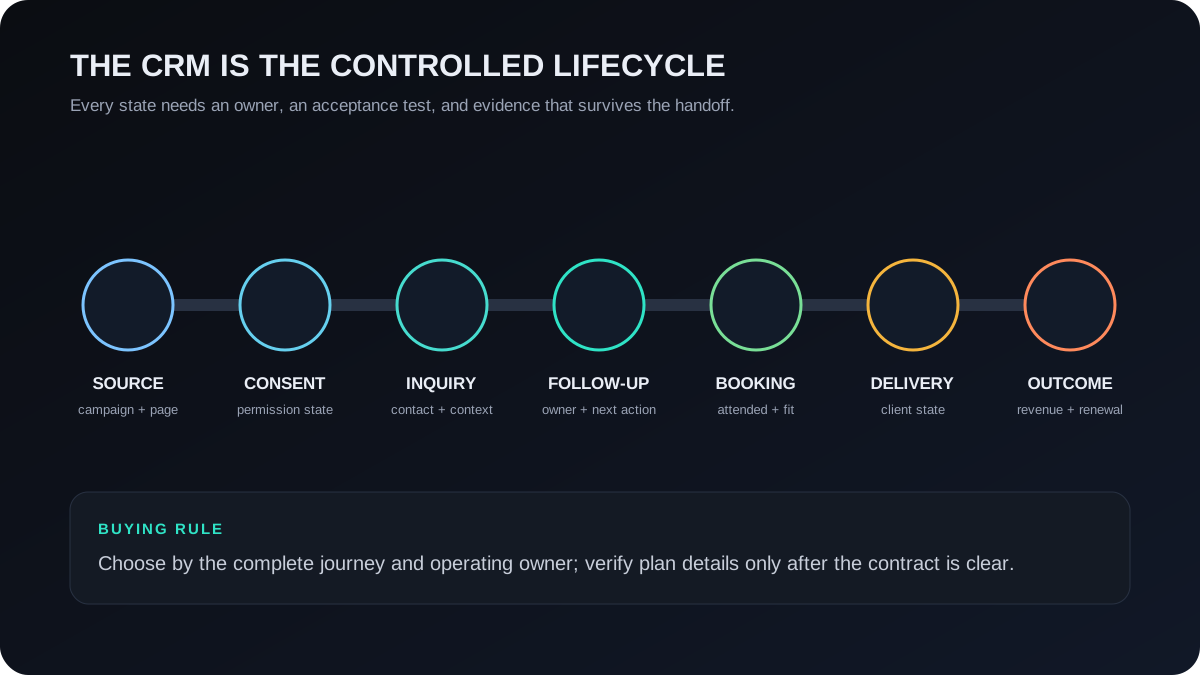
- The minimum useful lifecycle is source, consent, inquiry, follow-up, booking, attendance, qualification, opportunity, and outcome.
- All-in-one, course-first, service-business, and sales-pipeline systems solve different operating problems; there is no universal winner, so this guide picks one named tool per category rather than ranking all of them against each other.
- Total cost includes the plan, users, contacts, messaging, email, phone, payments, integrations, migration, maintenance, and operator time.
- GSC recorded 932 impressions, no clicks, and an average position of 14.8 for this owner across the 28 days ending October 7, 2026, up from 170 impressions at position 55 fourteen months earlier. The query is well placed; the page was not yet answering it in the comparison format the SERP rewards.
| Quick pick | Tool | Why |
|---|---|---|
| Best all-in-one (CRM + funnels + automation) | GoHighLevel | One subscription holds the contact database, funnel builder, messaging, and calendars |
| Best for course and membership delivery | Kajabi | Course, community, and checkout led, with CRM features built around the product |
| Best for 1:1 service work | HoneyBook or Dubsado | Proposals, contracts, scheduling, and invoicing for client-by-client delivery |
| Best free starting point | HubSpot (free CRM) | A no-cost sales pipeline for a coach who mainly needs deal stages and tasks |
Checked October 8, 2026. Plan names, limits, and prices change; verify the current structure on each vendor's own pricing page before you buy.
Most CRM comparisons start with feature checkboxes. Start with the journey instead. Write down what must happen from first source through consent, conversation, booking, delivery, renewal, and revenue; name the operator; then test the system against that contract. A capable platform operated inconsistently is usually less reliable than a smaller system with clear ownership and acceptance tests.
How we chose these four
We are Vibeera. We operate client CRMs for a living, but we do not sell CRM software, so we have no product in this comparison to favor. We scored each tool on the lifecycle it genuinely covers end to end, whether coaches commonly run it (not just marketers), a sourced price point where we could verify one, and the honest tradeoff it asks you to accept. GoHighLevel, Kajabi, HoneyBook, Dubsado, and HubSpot are the five names that come up across current coach-CRM roundups and our own client conversations; we did not invent or exclude any to flatter an outcome.
1. GoHighLevel: best all-in-one CRM, funnels, and automation
Who it's for: coaches who want CRM, funnel pages, email and SMS, calendars, and automation in one subscription and are willing to build and maintain it. Pricing: about $97 a month on its Unlimited plan as of 2026, confirmed on our own GoHighLevel review for coaches; verify the current tier names and price on GoHighLevel's own pricing page before buying. Standout: one login for the whole acquisition-to-booking chain, including a built-in AI chatbot and voice agent. Drawback: it is fully DIY software; the funnels, sequences, and AI features do not configure themselves. Verdict: the strongest all-in-one if you or someone on your team will actually operate it.
2. Kajabi: best for course and membership delivery
Who it's for: coaches whose business is built on a course, a membership, or a community checkout first, with sales activity flowing around that product. Pricing: about $149 a month as of 2026 per our own Kajabi vs GoHighLevel comparison; Kajabi has changed its plan structure before, so confirm the current tiers on Kajabi's own pricing page. Standout: the product, checkout, and contact record live in one place with no separate course platform to sync. Drawback: its pre-sale pipeline and outreach tools are thinner than a CRM built for sales first. Verdict: the right pick when delivery, not outbound sales, is the center of gravity.
3. HoneyBook or Dubsado: best for 1:1 service work
Who it's for: coaches running proposal-to-invoice client work rather than a funnel or a course. Pricing: both price in tiers well under GoHighLevel's and Kajabi's range; neither vendor's current plan structure could be verified against its own site in this run, so treat any figure you see elsewhere as unconfirmed until you check honeybook.com or dubsado.com directly. Standout: contracts, scheduling, and invoicing are native, so there is no separate paperwork stack. Drawback: the pipeline is built for project-based client work, not a multi-step sales funnel or cold outreach. Verdict: HoneyBook for a simpler, more guided setup; Dubsado when you need deeper conditional workflow logic.
4. HubSpot: best free starting point
Who it's for: a coach who mainly needs deal stages, tasks, and a shared pipeline, and is not ready to pay for a platform yet. Pricing: HubSpot has long offered a free CRM tier; its current paid-tier limits and prices could not be verified against hubspot.com in this run, so confirm them before you plan around a paid upgrade. Standout: a real sales pipeline at no cost, with room to add marketing and service tools from the same company later. Drawback: it is a general-purpose sales CRM, not built for coaching-specific delivery, scheduling, or course features. Verdict: the lowest-risk way to stop running your pipeline in a spreadsheet.
Is an operated CRM layer the right fit, or do you just need a tool?
This section is about us, so read it with that bias in mind. Vibeera is not a sixth CRM to add to the list above; it is a team of AI agents, under human supervision, that can operate the CRM you already picked, so the fields, automations, and follow-up actually get run every week instead of half-built.
- Best fit: you have already chosen or already run one of the four tools above, the software is not the problem, and the real gap is that nobody reliably operates it week to week.
- Poor fit: you have not yet picked a category, you are comparing tools mainly on price, or your coaching business has not yet reached the point where outreach and follow-up volume outpaces what you can run yourself.
- Switching trigger: leads go stale between inquiry and follow-up, bookings and CRM stages drift out of sync, or the system works in a demo but nobody maintains it past week two.
If none of those describe you, the honest answer is to pick from the comparison above and run it yourself for now; come back here if the operating gap shows up later.
How to actually choose
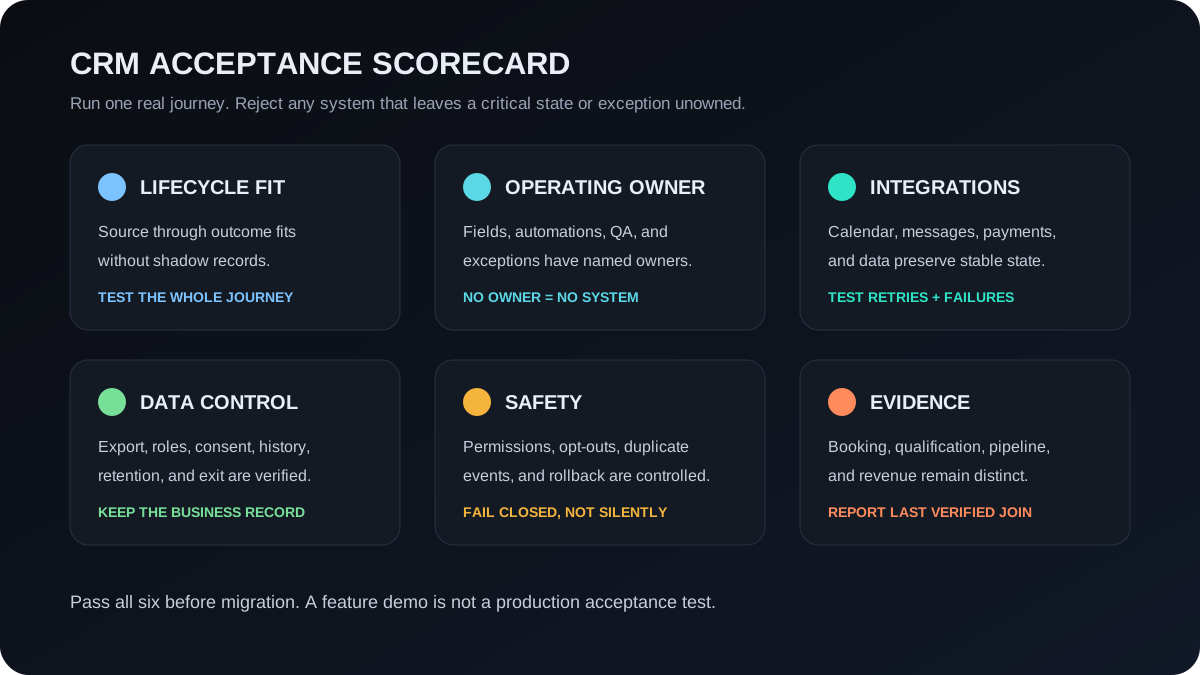
- Map the lifecycle. Define source, consent, inquiry, follow-up, booking, attendance, qualification, opportunity, client delivery, and outcome.
- Name the operator. Specify who maintains fields, automations, calendars, permissions, exceptions, deduplication, and reporting each week.
- Price the complete stack. Include required plan, users, contacts, messaging, email, phone, payments, integrations, migration, maintenance, and operator time.
- Protect the data. Require export, role controls, consent and suppression handling, audit history, stable identifiers, retention rules, and a tested exit path.
- Run acceptance tests. Test a valid lead, duplicate, missing field, opt-out, failed provider event, calendar cancellation, reschedule, no-show, qualification, and rollback.
- Verify the evidence. Confirm that source, landing page, booking, contact, opportunity, and revenue states remain joinable without presenting correlation as causation.
If your search started from a GoHighLevel comparison, the wider field of tools, hires, and operated options is laid out in the GoHighLevel alternatives for coaches guide. And if you already run a CRM with AI features and are wondering whether you still need the platform at all, see do you need GoHighLevel if you have AI marketing.
Current search evidence and refresh decision
Google Search Console was checked October 8, 2026 for the 28 days ending October 7. This preferred URL recorded 932 impressions, no clicks, and an average position of 14.8, a sharp improvement from the 170 impressions at position 55 recorded on the prior check in August. Across 41 distinct queries, the clearest demand sat on crm for coaches (226 impressions, position 12.7), best crm for coaches (150 impressions, position 10.3), best crm for coaching business (68 impressions), crm for coaching business (57 impressions), and coaching crm (52 impressions). Five queries were prompt-like (eight or more words, or phrased as a question to an assistant), including looking for a crm built for coaches and consultants, alternatives to major crms for structured deal coaching, and what pricing models do coaching crms use and which is most cost-effective?; these are reported separately and did not drive this decision. The page already ranks well; it had not yet earned a click because it answered with a selection framework where the live SERP rewards a numbered comparison. That mismatch, not the ranking, is why this refresh replaces the category-first structure with named options while keeping the acceptance test. Search Console evidence does not prove buyer quality, bookings, pipeline, or revenue.
Pricing and source boundary
CRM plans, usage allowances, included channels, AI features, contact limits, messaging rates, and payment terms change. The GoHighLevel and Kajabi figures above are reused from Vibeera's own already-published, dated reviews linked in each entry; HoneyBook, Dubsado, and HubSpot's current plan structures could not be checked against their own sites in this run, so no price is asserted for them above. This guide does not publish a universal price winner. On the purchase date, verify the required configuration on each vendor's official pricing and product pages, retain the checked date and plan, and model total operating cost. The comparison, lifecycle map, and acceptance scorecard are Vibeera operator analysis; they do not claim a vendor result or customer outcome.
Frequently asked questions
What is the best CRM for coaches in 2026?
The best CRM is the one that supports the coach's real lifecycle, preserves source and consent data, fits required integrations, has a named operator, and can be accepted through test journeys. Choose by operating model and evidence, then verify current vendor plans before purchase.
Do coaches need a CRM or just a marketing agency?
A coaching business usually needs a reliable system of record for contacts, consent, conversations, bookings, opportunities, and outcomes. That may be operated internally, by a specialist, or by an agency, but the accountable owner and acceptance tests should be explicit.
How should a coach compare CRM pricing?
Compare the current total operating cost: required plan, users, contacts, messaging, email, phone, payments, integrations, migration, setup, maintenance, and operator time. Public plan prices and inclusions change, so verify them on official vendor pages on the purchase date.
Is Vibeera a fit for choosing or running my coaching CRM?
Vibeera does not sell CRM software, so it is not one of the tools in this comparison. Vibeera is a fit if you have already picked, or already run, a CRM and the real gap is an accountable operator: someone who maintains the fields, automations, and follow-up every week. Vibeera is a poor fit if you have not yet chosen a category, run a coaching business under $100K/mo, or want a cheaper tool rather than an operator.
Curious what your own AI would do first?
Map the lifecycle, operating owner, integrations, controls, acceptance tests, and evidence boundary before choosing or rebuilding the CRM.
See it run your business