Ocoya alternatives: which option fits how you actually work?

The best Ocoya alternative depends on the operating problem you are trying to solve. Choose Buffer for simple per-channel publishing, Metricool for analytics-led management, Planable for client approvals, SocialPilot for a multi-account agency stack, or an operated service such as Vibeera when the real bottleneck is running the system rather than buying another social media tool.
Key facts
- Ocoya starts at $15 per month on the public monthly pricing page checked August 24, 2026, with one workspace, one user, five social profiles, and 100 credits.
- This comparison uses official public product and pricing pages. Vibeera did not create trial accounts, so interface, reliability, support, and output-quality claims are outside the evidence.
- The meaningful switching criteria are operating model, account structure, approval path, reporting need, platform mix, and who owns execution.
- Ahrefs data checked August 24 showed US and global volume 200, forecast volume 316, and CPC $13; its current snapshot did not provide KD or Traffic Potential without a paid refresh.
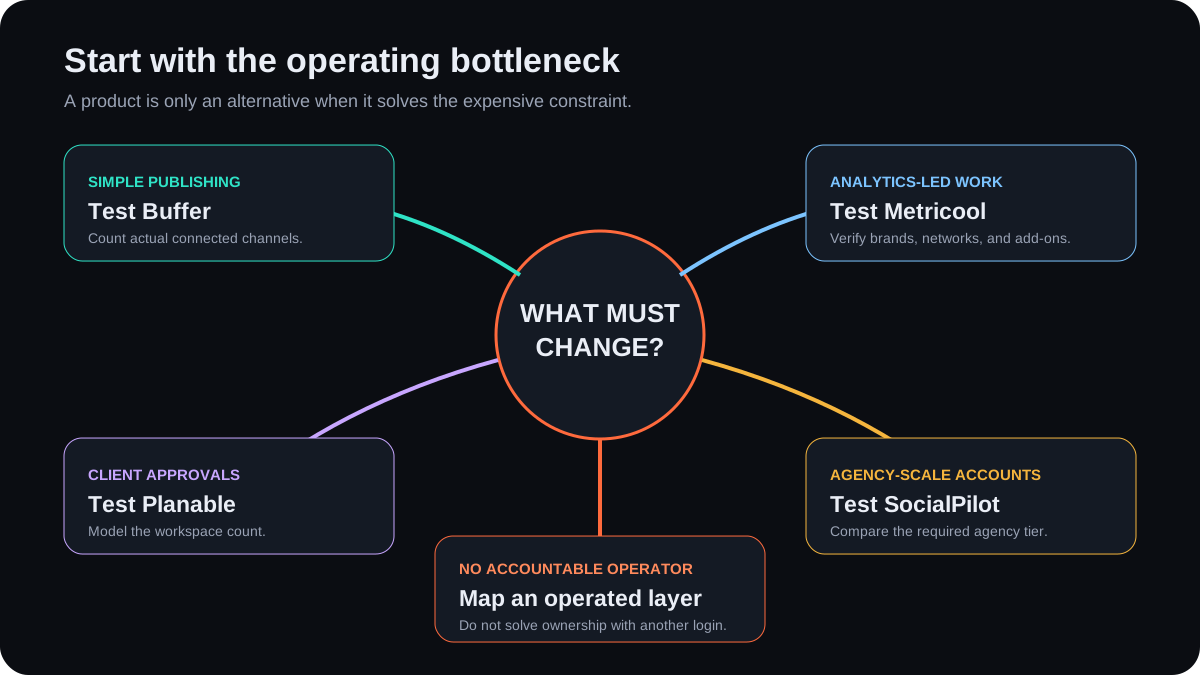
Most Ocoya alternatives pages fail at the first decision. They collect products that share a category label, then rank them without asking what the buyer needs to change. A useful comparison starts with the bottleneck. Is the problem basic publishing, multi-brand analytics, client approval, agency-scale account management, or the absence of someone who owns execution?
Research method and evidence boundary
- Official public pages were checked on August 24, 2026.
- No trial accounts were created and no product interface was tested in this run.
- Feature and pricing facts are mutable. Verify the vendor page before purchase.
- Vibeera is disclosed as an operated service, not presented as equivalent software.
Original contribution: The Vibeera scorecard evaluates the migration decision across workflow gap, migration load, team adoption, measurement continuity, and operator ownership. It is an operator framework, not a vendor test, product ranking, or performance claim.
Ocoya alternatives by operating need
| Option | Best fit in this comparison | Public entry point checked | Important operating note |
|---|---|---|---|
| Ocoya | AI-assisted content creation plus social scheduling in one tool | $15/month Bronze | One workspace, one user, five social profiles, and 100 credits |
| Buffer | Simple publishing with per-channel economics | Free; Essentials $5/month per channel on annual billing | Pricing scales by connected channel rather than workspace |
| Metricool | Analytics-led management and competitor tracking | Free; Starter from €16/month on annual billing on the checked page | Free-plan channel limits differ, and X can require an add-on |
| Planable | Client collaboration and required approval workflows | First 50 posts free; Basic from $33/workspace/month on annual billing | Paid pricing and limits are organized by workspace |
| SocialPilot | Multi-account publishing for small teams and agencies | Essentials $17/month annual or $20 monthly | Client approvals and white-label reports appear on higher agency tiers |
| Vibeera | An operated marketing system rather than another scheduler | Scope-based implementation mapping | Not self-serve software and not a direct feature-for-feature substitute |
Prices are the public starting points visible on official pages on August 24, 2026. Taxes, regions, billing periods, add-ons, account counts, and negotiated plans can change the actual cost. The table does not rank reliability, support, output quality, or return on investment because this run did not produce defensible evidence for those claims.
Choose Buffer when publishing simplicity is the problem
Buffer's official pricing is organized around connected channels. The free plan allows up to three channels and ten scheduled posts per channel. The public annual pricing page shows Essentials at $5 per month for one channel and Team at $10 per month for one channel. Buffer also documents publishing across Instagram, TikTok, Facebook, X, Pinterest, LinkedIn, YouTube Shorts, Google Business Profile, and other supported channels.
That makes Buffer the clearest option in this set when the job is to create a queue, tailor posts by channel, and keep account cost legible. It is not proof that Buffer will be cheaper for every multi-brand configuration. Count the actual channels and team requirements before comparing totals.
Choose Metricool when analytics and multi-brand visibility lead
Metricool's official pricing page shows a free plan for one brand with 20 scheduled posts per month and 30 days of analytics. The checked page shows Starter from €16 per month on annual billing, with up to ten brands, unlimited publishing subject to fair-use terms, competitor analysis, reporting, and longer analytics history. The page also notes plan-specific channel and add-on conditions.
Metricool therefore deserves the first test when the buyer's weekly decision depends on performance visibility and competitor monitoring, not only content generation. Verify the precise social networks, brand count, and add-ons for your region.
Choose Planable when approvals are the constraint
Planable organizes work by workspace and makes approvals central. Its public pricing page shows the first 50 created posts free, Basic from $33 per workspace per month with annual billing, and Pro from $49 per workspace per month with annual billing. The published comparison separates optional, required, and multi-level approval capability by plan.
Planable is the most direct candidate here when clients, legal reviewers, or distributed teams need a visible draft, comment, approval, and publishing trail. Model the number of client workspaces before comparing cost with per-channel tools.
Choose SocialPilot when agency-scale publishing leads
SocialPilot's official pricing page shows Essentials at $17 per month on annual billing or $20 monthly for five social accounts and one user. Standard increases account and user capacity. Premium adds client approval and white-label reports, while Ultimate targets established agencies and multi-location brands.
That makes SocialPilot a practical candidate when the core requirement is multi-account operation and agency delivery. The correct comparison is between the tier you actually need and Ocoya's workspace, user, profile, credit, and API limits, not between the lowest advertised prices.
Keep Ocoya when its combined workflow already fits
Ocoya's official public pricing page shows Bronze at $15 per month, Silver at $39, Gold at $79, and Diamond at $159 on monthly billing. The same page describes one to unlimited workspaces, five to 150 social profiles, and 100 to unlimited credits by plan. Its integrations page lists established social networks and marks several newer integrations as beta.
Do not migrate merely because another product has a longer feature list. Keep Ocoya when the profile count, workspace model, credits, supported networks, and combined creation-plus-scheduling workflow match the team. A switch creates setup, training, approval, reporting, and historical-data costs that pricing tables rarely show.
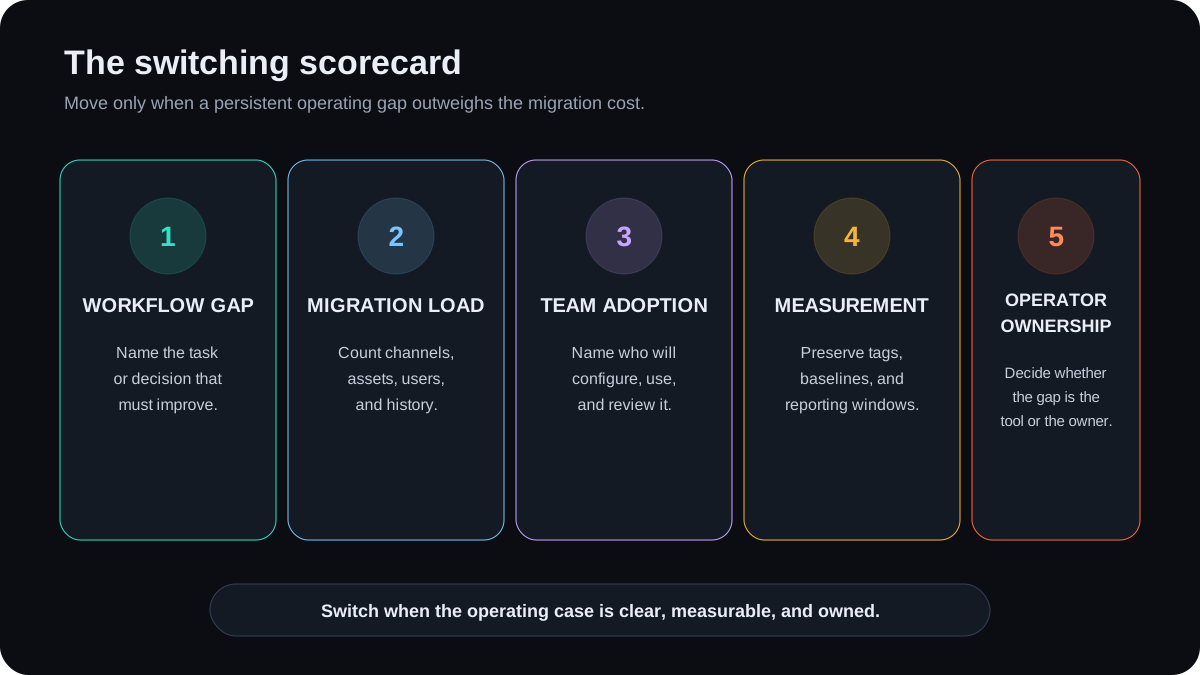
The switching scorecard
- Workflow gap: name the recurring task or decision Ocoya cannot support well enough.
- Migration load: count channels, users, approvals, assets, calendars, analytics history, and integrations that must move.
- Team adoption: identify who will configure, operate, review, and troubleshoot the new system.
- Measurement continuity: preserve source naming, campaign tags, reporting windows, and baselines before changing tools.
- Operator ownership: decide whether the real need is different software or a person accountable for the work.
Where an operated service belongs
Vibeera is not an Ocoya clone and should not be evaluated as one. Vibeera belongs in the decision when the business has accumulated tools but still lacks consistent outreach, follow-up, funnel operation, reporting, and weekly correction. In that case, replacing a scheduler may move the interface without fixing the operating bottleneck.
The credible bridge is operational: keep or replace the tools that fit, then assign one operated layer to connect the recurring work and the measurement. The mapping call identifies which parts should stay in the existing stack, which need another product, and which need an accountable operator.
Related software guide: compare how marketing automation tools fit into a broader operating system. Different buying decision: compare an operated AI department with a conventional marketing agency.Official sources checked
- Ocoya pricing and Ocoya integrations
- Buffer pricing and Buffer publishing support
- Metricool pricing
- Planable pricing
- SocialPilot pricing
All product facts above were checked on August 24, 2026. Official vendor documentation is the primary source for plans and capabilities, but it is also commercial and mutable. This page therefore separates published facts from Vibeera's buyer-fit analysis and asks readers to verify the final configuration before purchasing.
The decision
Choose the alternative that fixes the expensive operating constraint. Buffer is the clean publishing choice, Metricool the analytics-led choice, Planable the approval-led choice, and SocialPilot the agency-scale choice in this research set. Keep Ocoya if its combined creation and scheduling model still fits. Choose an operated service only when software ownership, not software availability, is the real bottleneck.
Frequently asked questions
What is the best Ocoya alternative?
There is no universal best option. Buffer is a strong fit for simple publishing, Metricool for analytics-led management, Planable for approvals, SocialPilot for agency-scale account management, and an operated service for teams that need someone to run the system rather than another tool.
Is there a free alternative to Ocoya?
Buffer and Metricool both publish free plans, and Planable offers its first 50 created posts free. Limits and included channels differ, so test the exact workflow you need and check the current official pricing page before committing.
Which Ocoya alternative is best for agencies?
SocialPilot publishes multi-account agency plans with client approvals and white-label reporting at higher tiers, while Planable prices by workspace and emphasizes collaboration and approvals. The better fit depends on whether publishing scale or approval workflow is the primary constraint.
Should I switch away from Ocoya?
Switch only when a specific operating constraint is expensive enough to justify migration. Keep Ocoya if its supported networks, workspaces, credit model, and publishing workflow fit your team. Move when approvals, analytics, account economics, platform coverage, or operating ownership create a persistent gap.
Is Vibeera an Ocoya software alternative?
No. Vibeera is an operated AI marketing service, not a self-serve social media scheduling application. It belongs in the decision only when the business needs an accountable operator across outreach, funnels, follow-up, content, and reporting rather than a replacement scheduler.
Decide whether the gap is software or operation
Vibeera will map the current stack, the missing operating layer, and the measurable handoff before recommending a change.
Map the implementation