Marketing automation for small business
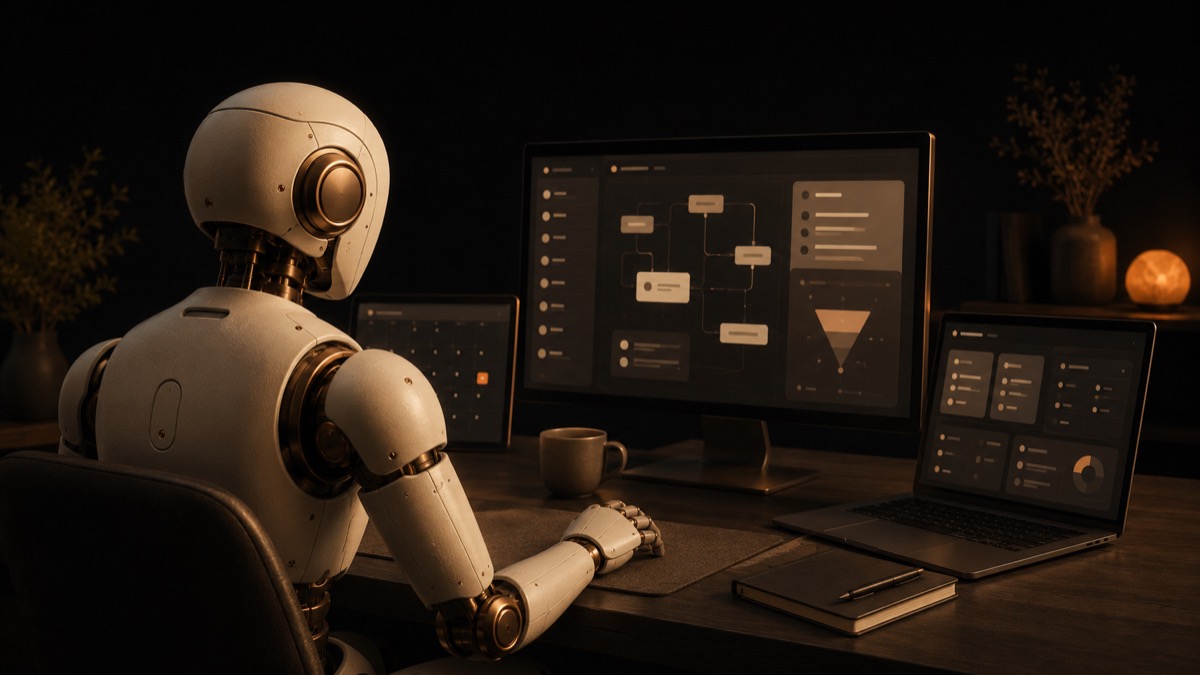
Marketing automation for a small business is software that runs the repetitive marketing tasks for you instead of you doing them by hand: instant lead follow-up, email and message sequences, appointment booking and reminders, lead capture, and reporting. The goal is that no lead goes cold because you were busy, and that the recurring work happens consistently whether or not you have time that day. The real choice is not which tool, but whether you build and maintain the automation yourself with DIY software, or have it installed and operated for you. This guide covers what to automate, in what order, the honest tradeoffs between DIY and operated, and what it costs.
Key facts
- Marketing automation runs the repetitive jobs for you: lead follow-up, sequences, booking and reminders, capture and tagging, and reporting.
- Automate lead follow-up first. That is where money leaks fastest, because most leads are lost to slow or missing follow-up, not a bad offer.
- DIY tools buy control at the cost of your setup and maintenance time. An operated approach buys speed and a result with nothing technical to run.
- A half-built automation can do more harm than none, which is why setup and upkeep are the real cost, not the monthly fee.
- Classic automation fires fixed rules. AI marketing adds agents that draft, personalize, and adapt. Most small businesses end up with a blend.
- Vibeera installs and operates the combined system in about 14 days, backed by written performance guarantees.
Most small businesses do not have a marketing automation problem so much as a follow-up problem, a consistency problem, and a time problem, all of which automation is meant to solve. The trouble is that "marketing automation for small business" usually gets answered with a list of software, as if the hard part were picking a tool. The hard part is deciding what to automate, doing it in the right order, and keeping it running. This guide treats automation as the work it is supposed to do, not the app you log into, and it is honest about the gap between buying software and getting a result.
What marketing automation actually does
Strip away the jargon and marketing automation is a short list of recurring jobs that used to depend on you remembering to do them. These are the tasks that quietly decide whether a lead becomes a customer.
- Lead follow-up. Replying to a new lead fast and then following up again and again until they respond, without you having to watch the inbox.
- Email and message sequences. A planned series of touches that go out automatically after someone fills a form, books, or buys, so nobody falls through the cracks.
- Appointment booking and reminders. Letting people book themselves, then sending reminders that cut no-shows without a single manual message.
- Lead capture and tagging. Pulling in leads from your forms, ads, and messages, and sorting them so the right follow-up reaches the right person.
- Reporting. A continuous read of what is working, instead of a weekly export you never quite get around to.
None of these are glamorous, and that is exactly why they get skipped when you are busy running the business. Automation matters because it does the unglamorous, time-sensitive work the same way every time, including at 11pm on a Saturday when a lead is deciding whether to bother with you or your competitor.
What to automate first
The mistake is automating the easy thing instead of the costly thing. Work in order of where money leaks, not where setup is simplest.
- Lead follow-up. Start here. Most leads are lost not because the offer was wrong but because nobody replied quickly enough or often enough. Instant, persistent follow-up usually moves the number before anything else does.
- Appointment booking and reminders. Once leads are responding, make booking effortless and cut no-shows with automatic reminders. This recovers revenue you have already half-earned.
- Nurture sequences. For the people who are interested but not ready, a steady sequence keeps you top of mind until they are, without you chasing manually.
- Reporting. Last, automate the read on all of it, so you can see what is working and decide what to change without a manual export.
If you only ever automate one thing, automate follow-up. It is the single highest-leverage piece for almost every small business, because speed and persistence are precisely what a busy owner cannot reliably provide by hand.
DIY tools versus an operated approach
This is the real decision, and it is usually framed wrong. The question is not which automation tool to buy. It is whether you build and run the automation yourself, or have it installed and operated for you. Both are legitimate. They suit different businesses.
DIY automation tools hand you the software and leave the building, maintaining, and judgment to you. They are affordable on a monthly fee and give you full control. The catch is that the monthly fee is the small cost. The large, hidden cost is the time to set the automations up correctly and keep them working as your offers and channels change. A half-built automation is worse than none: it sends the wrong message to the wrong list, or it silently stops firing and you do not notice until leads have gone cold for a month.
An operated approach installs and runs the system for you. Vibeera, an AI marketing agency that installs and operates a department of AI agents, builds the automation, runs it, and maintains it, while you keep strategy and brand voice. There is nothing technical for you to manage and nobody for you to train. The tradeoff is less hands-on tinkering and a higher cost than raw software, in exchange for the work actually getting done and staying done. For an owner whose scarcest resource is time, that trade usually favors operated.
| Dimension | DIY automation tools | Operated AI approach |
|---|---|---|
| Who builds it | You, from a blank setup | Installed for you and ready to run |
| Who maintains it | You, as offers and channels change | Operated and maintained for you |
| Real cost | Low monthly fee plus your setup and upkeep time | Higher fee that covers the work and the upkeep |
| Time to working | However long you can carve out to build it | About 14 days to install and operate |
| Main risk | A half-built automation that misfires or stalls unnoticed | Less hands-on control over the internals |
| What stays yours | Strategy, brand voice, and the offer | Strategy, brand voice, and the offer |
Automation versus AI marketing
These two terms get used as if they mean the same thing, and the difference matters for what you should expect. Classic marketing automation follows fixed rules you set up in advance: send this email two days after a form fill, tag this lead when they click. It is reliable and dumb, in the good sense. It does exactly what you told it, and nothing more. AI marketing adds agents that can draft content, personalize a reply, handle an unusual message, and adapt, rather than only firing pre-set steps.
Most small businesses end up wanting both: the rule-based plumbing that never forgets a step, and the adaptive agents that handle the messy, human parts. An operated AI approach packages the two so they run together, which is why it tends to outperform a pile of disconnected DIY automations that each handle one narrow rule. The honest caveat is that AI is not magic and still needs supervision and a clear brand voice to draft toward, which is the human part that does not automate away.
What it costs
Pricing depends entirely on scope, so treat these as general market ranges rather than quotes. DIY automation tools commonly run from a low monthly subscription into a few hundred dollars a month as your contacts and features grow, but that figure excludes your own setup and maintenance time, which is usually the larger real cost. An operated approach that installs and runs the system costs more than raw software, because it covers the work and the upkeep, but it typically lands at a fraction of a full marketing hire and runs around the clock. The fair comparison is cost per booked call and per customer with your own hours counted, not the sticker price of a subscription.
So what should a small business do?
Decide what to automate by where money leaks, and automate follow-up first. Then decide DIY versus operated by your scarcest resource. If you have time and enjoy building systems, DIY tools give you control. If your time is the bottleneck and you want the work done and kept running, an operated AI approach installs and maintains the whole system so you can stay on strategy and the offer. Either way, the win is the same: the time-sensitive, repetitive work that decides whether a lead becomes a customer stops depending on you remembering to do it.
Related reading
Frequently asked questions
What is marketing automation for a small business?
Marketing automation for a small business is software that runs the repetitive marketing tasks for you instead of you doing them by hand. The common jobs are instant lead follow-up, email and message sequences, appointment booking and reminders, lead capture and tagging, and reporting. The goal is that no lead goes cold because you were busy, and that the recurring work happens consistently whether or not you have time that day. The tools handle the steps you would otherwise forget at the worst moment.
What should a small business automate first?
Automate lead follow-up first, because that is where money leaks fastest. Most leads are lost not because the offer was wrong but because nobody replied quickly enough or often enough. After follow-up, automate appointment booking and reminders to cut no-shows, then nurture sequences to stay in touch until people are ready, then reporting so you can see what is working without a manual export. Start with the one task whose failure costs you the most, not the one that is easiest to set up.
What is the difference between DIY automation tools and an operated AI approach?
DIY automation tools give you the software and leave the building, maintaining, and judgment to you. They are affordable on a monthly fee, but the real cost is the time to set them up and keep them working, and a half-built automation can do more harm than none. An operated AI approach installs and runs the system for you: AI agents handle the execution, a human keeps strategy and brand voice, and there is nothing technical for you to maintain. DIY buys control at the cost of your time. Operated buys speed and a result at the cost of less hands-on tinkering.
How much does marketing automation cost for a small business?
DIY automation tools commonly run from a low monthly subscription into a few hundred dollars a month depending on contacts and features, but that price excludes your own setup and maintenance time, which is the larger hidden cost. An operated approach that installs and runs the system costs more than raw software but covers the work and the upkeep, usually for a fraction of a full marketing hire. These are general market ranges, not quotes, and they move with scope.
Is marketing automation the same as AI marketing?
No. Classic marketing automation follows fixed rules you set up in advance, like send email two days after a form fill. AI marketing adds agents that can draft content, personalize replies, handle unusual messages, and adapt, rather than only firing pre-set steps. Most small businesses end up with a blend, and the operated AI approach packages both so the rule-based plumbing and the adaptive agents run together. Vibeera installs and operates that combined system so there is nothing technical for the owner to run.
Keep reading · What marketing automation is, beyond small business
Curious what your own AI would do first?
We map it to your business on a short call, then build it in about 14 days.
See it run your business