AI lead generation agency: what should you actually buy?

An AI lead generation agency should operate the complete path from buyer signal to qualified meeting, not hand you a list, a chatbot, or another dashboard to manage. The useful product is a controlled system that sources permitted data, applies fit rules, runs outreach, handles replies, books qualified conversations, writes the truth back to the CRM, and keeps a human accountable for judgment.
Key facts
- The buyer outcome is a qualified meeting with traceable source data, not a large contact list or a raw lead count.
- Software can automate steps, but an agency is responsible for the operating rules, exceptions, handoff, measurement, and weekly correction loop.
- The safest system separates human decisions about offer, audience, voice, and exceptions from repeatable AI-assisted execution.
- Ahrefs data checked August 24, 2026 showed US volume 250, global volume 450, KD 39, Traffic Potential 50, and CPC $0.70; the provider snapshot was last updated July 13.
The phrase sounds newer than the operating problem. Companies have always needed to find the right accounts, reach the right people, recognize interest, follow up, qualify the opportunity, and move the conversation into sales. AI changes how much of that recurring work can be automated. It does not remove the need for a clear offer, a lawful channel strategy, reliable data, careful handoff, or someone who owns the result.
This is one commercial workflow inside the broader AI marketing agency operating model, which also defines ownership across content, distribution, approvals, CRM truth, and weekly improvement.
What an AI lead generation agency should own
A credible agency owns the signal-to-meeting control loop. Each stage has an input, a decision rule, an exception path, and a measurable output. If a provider only sells one stage, call it software, data, appointment setting, or outbound production. Do not confuse a component with the whole operating system.
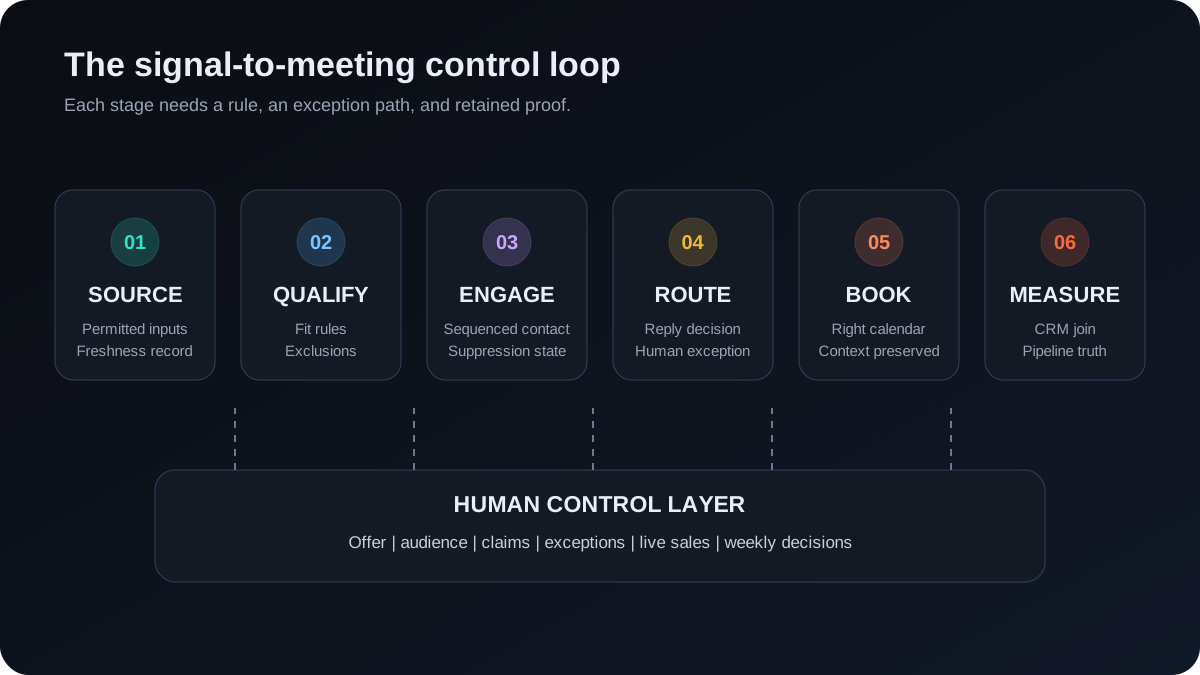
| Stage | Agency responsibility | Human control | Proof to retain |
|---|---|---|---|
| Source | Define permitted sources and keep data fresh | Approve market, exclusions, and channel rules | Source, checked date, consent or lawful-basis record where required |
| Qualify | Apply firmographic, behavioral, and problem-fit rules | Set the definition of a valuable account | Rule version and rejection reason |
| Engage | Run sequenced, relevant outreach and follow-up | Approve positioning, claims, and voice | Message version, delivery, reply, and suppression state |
| Route | Classify replies and send exceptions to a person | Handle sensitive, ambiguous, or high-value conversations | Classification, owner, response time, and escalation |
| Book | Offer the right calendar and preserve context | Protect qualification standards and capacity | Booked, attended, qualified, and no-show state |
| Measure | Join activity to CRM opportunity and revenue | Decide what to change each week | Source, meeting, opportunity, pipeline, and revenue join |
This is operational analysis from Vibeera, not a claim that every AI system performs each stage reliably without supervision. The useful design makes failures visible, routes exceptions, and keeps the source record intact.
Agency, software, or in-house team?
The right buying model depends on who will operate the system. Software is usually the lowest-commitment purchase, but it transfers configuration, daily use, quality assurance, and troubleshooting to your team. An in-house team gives direct control but requires hiring and management. An operated agency should combine the tools with a named operator, a review cadence, and a clear handoff into your existing sales process.
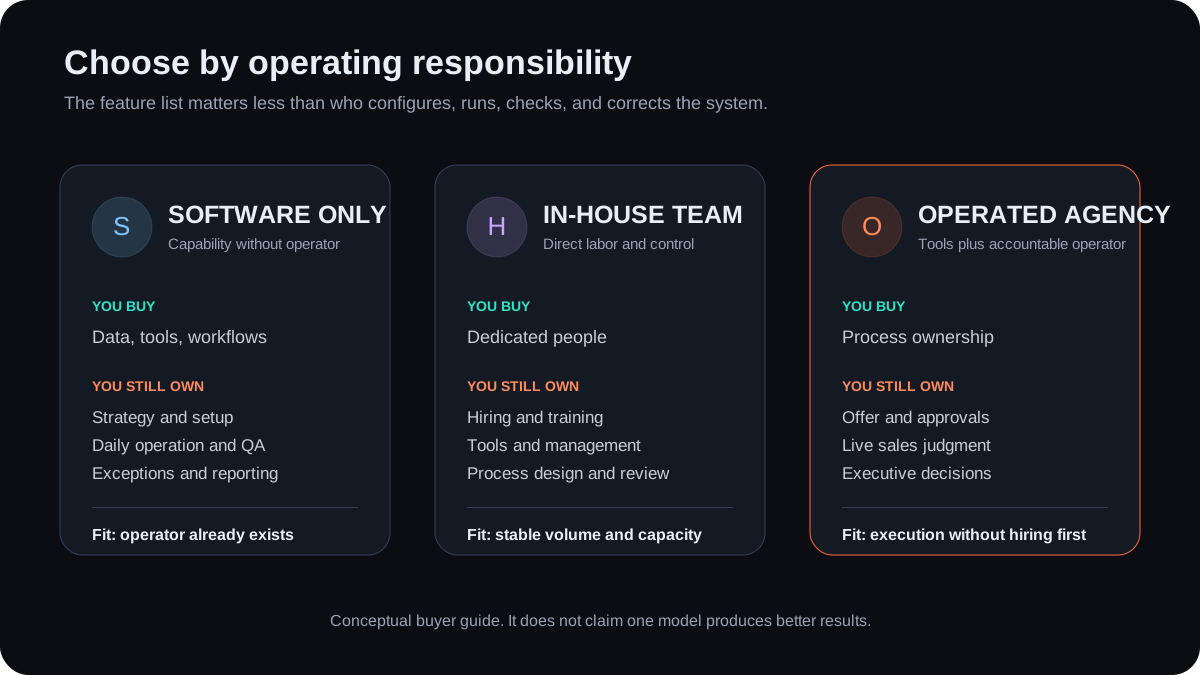
| Model | You are buying | Your team must still own | Best fit |
|---|---|---|---|
| Software only | Data, automation, messaging, or workflow capability | Strategy, configuration, operation, QA, exceptions, and reporting | Teams with a capable operator already in place |
| In-house team | Dedicated labor and direct managerial control | Hiring, training, tools, supervision, and process design | Businesses with stable volume and management capacity |
| Operated agency | Tools plus process ownership and an accountable operator | Offer, strategic approvals, live sales, and executive decisions | Teams that need execution without building the department first |
What should stay human?
Keep the high-cost judgment with a person. A human should approve the offer, target market, exclusions, factual claims, risk-sensitive channels, and the definition of a qualified opportunity. A human should also handle unusual replies, complaints, legal or compliance questions, strategic accounts, and the live sales conversation. AI can support these decisions, but the system needs an accountable owner.
Five questions that expose the real scope
- What exact business outcome do you own? A qualified attended meeting is different from a contact, reply, calendar booking, or unverified lead.
- Where does the data come from? Require source, checked date, exclusions, suppression handling, and country or channel constraints.
- Who handles exceptions? Ask what happens when the system is uncertain, the prospect objects, or the account is unusually valuable.
- What reaches the CRM? Every source, message, reply, booking, qualification decision, and revenue outcome should remain joinable.
- What changes each week? A managed service needs a review loop for fit, message, delivery, reply quality, handoff, and pipeline, not a monthly activity screenshot.
Red flags before you sign
- A guarantee based on raw leads or booked calls without an attended and qualified definition.
- A large database presented as proof that the provider can create demand.
- No written rules for exclusions, opt-outs, suppression, complaints, or sensitive replies.
- No source-to-CRM join, which makes pipeline and revenue attribution impossible.
- A system that sends every reply to a calendar without human escalation or capacity controls.
- Performance claims without a baseline, time window, input level, attribution method, and limitations.
Rules vary by channel, geography, and use case. Treat compliance as a documented operating requirement and get appropriate professional advice for your business rather than relying on a vendor's generic assurance.
How Vibeera frames the implementation
Vibeera treats lead generation as one operated layer inside a broader AI marketing department. The service bridge is the same problem described in this guide: connecting research, outreach, reply handling, booking, CRM updates, and reporting so the owner does not become the integration layer. The mapping call is used to define the target, controls, handoff, and measurement before any automation is recommended.
Related operating guide: see how a marketing automation workflow connects triggers, decisions, handoffs, and measurement. Specific workflow: compare appointment setting with the wider lead-generation system. Wider commercial owner: continue from qualified meetings through offer, landing path, sales acceptance, and joined revenue evidence.Research method and evidence boundary
Ahrefs data checked August 24, 2026 showed US volume 250, global volume 450, KD 39, Traffic Potential 50, and CPC $0.70; the provider snapshot was last updated July 13. The result set was mixed, with community and hiring pages competing alongside agencies. Those are demand and SERP signals, not a forecast that Vibeera will rank or create a particular number of meetings.
The operating controls are grounded in current primary guidance, but requirements vary by channel, geography, sender volume, and use case:
- The FTC's CAN-SPAM compliance guide says the US rules apply to commercial email, including business-to-business messages, and that hiring another company does not remove the sender's responsibility.
- Google's email sender guidelines document authentication, subscription, and spam-rate controls for mail sent to personal Gmail accounts.
- LinkedIn's Lead Gen Forms guidance requires a privacy-policy URL and a clear description of how collected information will be used.
These sources support control design, not legal advice or a claim that one checklist makes every campaign compliant. Obtain appropriate professional advice for the specific markets and channels in use.
The control loop, buying model, and checklist are Vibeera operator analysis. No client result, conversion rate, cost saving, or revenue claim is implied. Success for this page will be reviewed through discovery, crawl, indexation, impressions, qualified CTA activity, meetings, opportunities, and won revenue as the attribution bridge becomes available.
The decision
Buy an AI lead generation agency when you need someone to own the complete, measurable path from signal to qualified meeting. Buy software when your team already has the operator. Build in-house when volume and strategic control justify the hiring and management load. Whichever model you choose, insist on clear qualification, human escalation, CRM truth, and a weekly correction loop.
Frequently asked questions
What is an AI lead generation agency?
An AI lead generation agency operates software, data, outreach, qualification, booking, and CRM measurement as one managed system. The agency should own the rules and weekly correction loop while a human keeps control of the offer, target market, sensitive replies, and sales conversation.
How is an AI lead generation agency different from lead generation software?
Lead generation software gives your team capabilities such as data, enrichment, messaging, workflows, or scheduling. An AI lead generation agency is accountable for connecting and operating those capabilities against an agreed definition of a qualified meeting.
Can AI replace a sales development representative?
AI can handle much of the repeatable research, sequencing, reply classification, follow-up, routing, and CRM administration. A person should still own positioning, unusual conversations, compliance decisions, live qualification where nuance matters, and the sales meeting itself.
What metrics should an AI lead generation agency report?
At minimum, report permitted contacts reached, delivery failures, positive replies, qualified replies, booked meetings, attended meetings, qualified opportunities, pipeline, won revenue, source, landing page, and the reasons leads were rejected. Keep raw activity separate from business outcomes.
How do I choose an AI lead generation agency?
Ask the agency to map the whole signal-to-meeting loop, define qualification and exclusions, show who handles exceptions, explain data and channel controls, connect activity to your CRM, and agree on the review cadence. Reject providers that stop at lists, messages, or unverified booked-call claims.
Map the signal-to-meeting system before you buy tools
Vibeera will map the audience, controls, handoff, CRM join, and operated layer for your business.
Map the implementation